
McLaren MP4-12C wallpaper

McLaren MP4-12C image
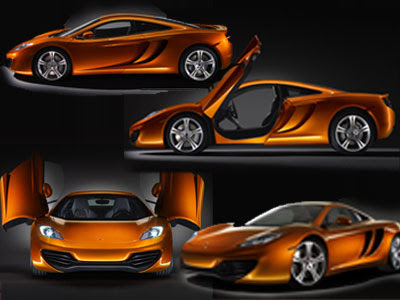
new McLaren MP4-12C

McLaren MP4-12C photo

McLaren MP4-12C picture
The McLaren MP4-12C is revealed as the first in a range of high-performance sports cars from McLaren Automotive, the independent car division based at the McLaren Technology Centre in Woking, England. The 12C, and future models within the range, will challenge the world's best sports cars, benefiting from the expertise and virtuosity of the McLaren Group.
Twenty years of sports car design, engineering and production combined with inspirational success in Formula 1 have driven Ron Dennis, McLaren Automotive Chairman, to announce his plans for the ultimate line-up of technology-led and customer-focused performance cars for the 21st century. The rules in the sports car world are about to be re-written.
Through a rich modern history, McLaren's automotive division has already built the world's most critically acclaimed supercar, the McLaren F1 (1993-1998) and the world's best-selling luxury supercar, the Mercedes-Benz SLR McLaren (2003-2009). McLaren Automotive now looks to the future with a new range of revolutionary sports cars.
"It is a long-held dream of mine to launch a range of high performance sports cars that set new standards in the industry," said Dennis.
"We began designing and building cars for aficionados of thoroughbred sports cars almost 20 years ago. Incorporating the leading edge technologies that the McLaren Group has built up within its various companies, I believe we are now perfectly placed to open up this new chapter in McLaren's history as well as play a part in the regeneration of high-tech manufacturing in the UK and global automotive environment," he concluded.
At its heart, the McLaren MP4-12C features a revolutionary carbon fibre chassis structure, the Carbon MonoCell: the first time a car in this market segment is based around such a strong and lightweight racing car engineering solution and the first time any car has ever featured a one-piece carbon fibre structure.
This step change in sports car design means that the 12C introduces new standards not just in handling, ride and outright performance, but also safety, economy and practicality in an already competitive sector.
Martin Whitmarsh, Team Principal of McLaren's racing team highlighted the integral part that McLaren's motorsport and road car experience played in developing the 12C: "McLaren has for years offered a potent mix of race car and road car technologies. This combination of McLaren's performance heritage, and future demands on what is expected of high performance sports cars in the 21st century, gave us a head-start when we embarked on this project. The 12C, and future variants, draws on the spirit of Formula 1 and delivers real-world technological advances."
The first car from the new company, the McLaren MP4-12C, is a high performance two-seat mid-engine model in the 'core' sports car market segment for cars costing between £125,000 and £175,000. The 12C is pure McLaren, featuring no carryover parts from any other car, and will be produced by McLaren in the UK. It goes on sale through a dedicated, worldwide retailer network in early 2011.
"McLaren is already a car maker with maturity and experience, having produced iconic cars such as the F1," said Antony Sheriff, McLaren Automotive Managing Director.
"The next step was to construct a range of pure McLaren high performance sports cars that are true to the company's philosophy and reflect our position as an absolute technology and performance leader. So, when we embarked on the 12C project, we wanted to re-write the rules of sports car design. Indeed, the 12C offers performance and technology that exceeds that of the world's most expensive and sophisticated supercars, while competing in a much more accessible market segment. And to achieve this result, we designed every component from scratch to meet the extreme goals of the 12C and avoid any compromise."
"Forget what you know about sports car companies, McLaren is different," he concluded.
Inside out
The heart of the new car is the Carbon MonoCell. McLaren pioneered the use of carbon composite construction in the 1981 Formula 1 MP4/1 model and set a trend that all Formula 1 teams have followed. The company brought carbon fibre to road cars for the first time with the 1993 McLaren F1 and then built on this experience with a carbon fibre chassis and body on the SLR manufactured to the same exacting standards, but in higher volumes.
So, until now, carbon chassis have remained the preserve of the most expensive exotic cars; a purchase for the super-rich where costs are driven by the complexity of carbon fibre chassis design and build.
The 12C changes this by introducing the advantages of carbon composite - light weight, high strength and torsional rigidity, and longevity - to a more affordable sector through its revolutionary engineering as a one-piece moulding. Never before has a carbon fibre chassis been produced this way.
The 12C MonoCell not only brings dynamic benefits, but also offers fundamental engineering opportunities that form the basis of the car's unique character. It has been designed to allow a much narrower structure overall which in turn contributes to a more compact car that is easier to position on the road and more rewarding to drive.
Not only is the 12C unique in its class by offering carbon technology, it also has the highest specific power output as well as extraordinary power- and torque-to-weight ratios. Furthermore, the Proactive Chassis Control system offers groundbreaking handling and ride comfort while an intense focus on occupant packaging offers new levels of comfort and everyday usability.
Antony Sheriff explained. "With the 12C we are redefining the relationship between performance and practicality, as well as performance and efficiency, achieving leading positions in both. We have designed this car from the inside out. We have a saying in McLaren - 'everything for a reason' and the 12C will surprise people in many ways.
"A clear illustration of its special qualities is in the efficiency of its power delivery. With the 12C's power output of around 600hp and its low CO2 emissions, it delivers the highest horsepower to CO2 ratio of any car on the market today with an internal combustion engine...and that includes petrol and diesel hybrids," Sheriff concluded.
Pure McLaren
All the parts of the McLaren MP4-12C are bespoke and unique to this car. Everything from the engine right down to the tailor-made switches and buttons is pure McLaren: nothing has come from another manufacturer's parts bin.
The 12C is powered by a bespoke McLaren 'M838T' 3.8 litre, V8 twin-turbo engine producing around 600bhp, driving through a McLaren seven speed Seamless Shift dual clutch gearbox (SSG). It is targeting not only new standards for power and performance in its sector, but also class-leading fuel economy and CO2 emissions; supported by McLaren's experience of active aerodynamics to aid cooling, grip, handling and road holding.
"The 12C is all about performance," said Sheriff. "And in McLaren, we have a very broad definition of performance. We don't just look at the traditional one-dimensional parameters like top speed, we focus equally on useable measures such as in-gear acceleration times, braking performance in all conditions, and efficiency of power delivery combined with the lowest possible fuel consumption and CO2 emissions. Sure, 12C is very fast, but it is also the most efficient, most driveable high-performance sports car in the world.
"In the more subjective areas of road-holding, handling, comfort, driver involvement and day-to-day usability, McLaren is achieving new standards for a mid-engined high performance sports car in this sector," he concluded.
Thorough engineering and market research led to concept development and a clear decision in favour of a mid-engined two door high performance sports car. Intensive work was carried out in the wind tunnel and the driving simulator to ensure that the new car would inherently have superb dynamic qualities.
Dick Glover, McLaren Automotive Technical Director, was closely involved with the development of these invaluable tools during his time with McLaren's Formula 1 race team.
"There are so many examples of race car process and technology transfer in the 12C," claimed Glover. "The car owes much to McLaren's experience and success in motor sport. The advantage of technology transfer is only one element; speed of decision-making and development, F1 processes and people all make an important contribution.
"Brake Steer, for example, is a technology we pioneered on our Formula 1 car back in 1997. It helps to dial out understeer on entry to a corner and improves traction on the way out. Another is the Pre-Cog function on the gearshift rocker that effectively primes the gearbox ready for the next change, ensuring a more satisfying and faster gearchange. This is a high performance sports car with race car genes and teamwork at its heart."
Adding lightness
Weight is the enemy of performance in every area of car design. It affects acceleration, speed, handling, fuel consumption and CO2 emissions - everything. McLaren Automotive engineers pursued weight saving obsessively. For example:
* The Carbon MonoCell not only reduces the weight of the structure but also allows for the use of much lighter weight body panels.
* The close position of the driver and passenger allows a narrower, lighter body while giving improved visibility with a clearer perception of the car's extremities.
* Brakes with forged aluminium hubs save 8 kg and weigh less than optional carbon ceramic brakes.
* Lightweight exhaust pipes exit straight out the rear of the car, minimizing their length and weight.
* Airflow-assisted Airbrake deployment dramatically reduces weight of the Airbrake activation system.
* Small, compact downsized engine coupled to lightweight compact SSG minimizes vehicle length, weight and polar moment of inertia.
* Significant weight was pared off the alloy wheels through intensive Finite Element Analysis of wall thicknesses.
* The engine cooling radiators were mounted at the rear, as close to the engine as possible, to minimize the pipework, the fluids contained within them, and therefore weight. They were also mounted in car line to minimize vehicle width.


